
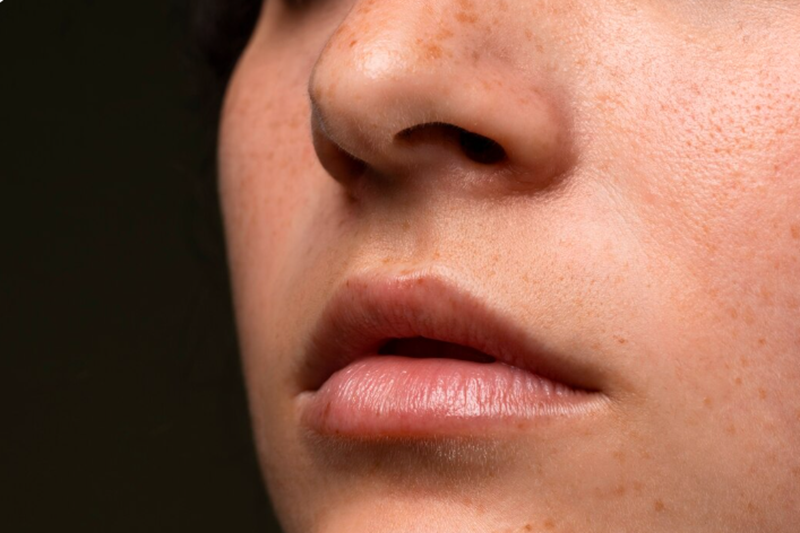
Have you ever noticed that the skin around your mouth looks darker than the rest of your face?
You are not alone. Hyperpigmentation around mouth is a common skin concern, but simply applying more brightening products is not always the answer.
The skin around the mouth can become darker because of sun exposure, irritation, hormonal changes, acne, dryness, or repeated friction. Finding the underlying trigger is often the first step toward improving the discoloration.
Online Aesthetic Consultation
Book an Online Aesthetic Consultation with Dr. Elham to discuss your goals and choose the most suitable option for you.

The good news is that there are several ways to make dark skin around the mouth less noticeable and support a more even complexion.
What Is Hyperpigmentation Around the Mouth?

Hyperpigmentation happens when certain areas of the skin produce or accumulate more melanin than usual.
Around the mouth, this can appear as a brown, grayish, or darker patch compared with the surrounding skin.
The discoloration may be subtle at first. Over time, however, it can become more noticeable, particularly after sun exposure or repeated irritation.
Why Is the Skin Around the Mouth Getting Darker?
There is rarely one universal cause.
Several factors can contribute to pigmentation around the mouth.
Sun Exposure
UV radiation can stimulate melanin production.
Regular sun exposure may also make existing pigmentation more visible and harder to improve.
Skin Irritation
Harsh cleansers, aggressive exfoliation, or frequent rubbing can irritate the delicate area around the lips.
Inflammation may then contribute to post-inflammatory hyperpigmentation.
Hormonal Changes
Hormonal fluctuations can trigger or worsen certain forms of facial pigmentation, including melasma.
Acne and Inflammation
A blemish may disappear, but the discoloration left behind can remain for much longer.
This is particularly relevant when acne or irritation repeatedly affects the area around the mouth.
Dryness and Friction
Dry, irritated skin can become more sensitive.
Frequent lip licking, wiping, rubbing, or friction from masks may also aggravate the area in some people.
5 Effective Ways to Reduce Dark Skin Around the Mouth

There is no single treatment that works for every cause of pigmentation.
The most effective approach depends on why the discoloration developed and how sensitive your skin is.
1. Protect Your Skin From the Sun
If you are trying to fade pigmentation, daily sun protection is essential.
UV exposure can stimulate additional melanin production and make existing dark patches more noticeable.
Apply a broad-spectrum sunscreen to the entire face, including the skin around your mouth.
Reapply when needed, especially during prolonged outdoor exposure.
For people prone to pigmentation, tinted sunscreens containing iron oxides may also be worth discussing with a dermatologist because visible light can contribute to some forms of facial hyperpigmentation.
Why Sunscreen Matters for Pigmentation
Think of sunscreen as part of the treatment rather than an optional extra.
Without consistent protection, other pigmentation treatments may have a harder time producing lasting improvement.
2. Try Gentle Brightening Ingredients
Certain skincare ingredients can help improve uneven pigmentation when used appropriately.
Common options include:
- Niacinamide
- Vitamin C
- Azelaic acid
- Retinoids
- Kojic acid
- Alpha hydroxy acids
However, using several active ingredients simultaneously is not necessarily better.
The skin around the mouth can be sensitive, so introducing products gradually is usually a more sensible approach.
If a product causes persistent burning, redness, or peeling, it may be irritating your skin rather than helping it.
3. Stop Over-Exfoliating the Area
More exfoliation does not automatically mean faster results.
In fact, excessive exfoliation can damage the skin barrier and cause inflammation.
That inflammation may make hyperpigmentation around mouth more noticeable.
Avoid harsh scrubs and unnecessary rubbing around the lips.
If you use chemical exfoliants, choose a suitable product and frequency based on your skin’s tolerance.
Be Careful With DIY Remedies
Lemon juice, baking soda, and abrasive homemade scrubs are sometimes promoted as natural solutions for dark skin.
They can irritate the skin, however.
Irritation can potentially make pigmentation worse rather than lighter.
4. Consider Professional Pigmentation Treatment
Sometimes skincare alone is not enough.
If the pigmentation is persistent, recurrent, or difficult to identify, a dermatologist can assess the area and determine the most likely cause.
Depending on the diagnosis, professional options may include prescription treatments, chemical peels, laser-based procedures, or other dermatological approaches.
The right treatment depends on factors such as your skin type, the cause of pigmentation, and how deeply the pigment is located.
If you need an assessment from a specialist, consulting a pigmentation doctor dubai can help determine which treatment approach is appropriate for your specific pigmentation concern.
Why Professional Assessment Matters
Not every dark patch around the mouth is the same.
What looks like ordinary pigmentation could have a different underlying cause.
A professional assessment can help prevent unnecessary experimentation with strong products or procedures.
5. Build a Consistent Skincare Routine
Pigmentation usually requires patience.
Changing products every few days can make it difficult to know what is actually helping.
Instead, focus on a simple and consistent routine.
Morning Routine
- Gentle cleanser
- Suitable brightening product
- Moisturizer
- Broad-spectrum sunscreen
Evening Routine
- Gentle cleanser
- Targeted pigmentation treatment
- Moisturizer
Your exact routine should be adjusted according to your skin type and sensitivity.
The goal is gradual improvement without creating additional irritation.
How Long Does It Take for Dark Skin Around the Mouth to Fade?
There is no universal timeline.
Mild discoloration may gradually become less noticeable with appropriate skincare and sun protection.
More persistent pigmentation can take longer and may require professional treatment.
The underlying cause also matters.
If irritation continues, for example, the pigmentation may keep returning even when you are using brightening products.
How to Tell If Your Treatment Is Working
Looking in the mirror every day can make gradual changes difficult to notice.
Instead, take occasional photographs under similar lighting conditions.
Online Aesthetic Consultation
Book an Online Aesthetic Consultation with Dr. Elham to discuss your goals and choose the most suitable option for you.
Look for:
- More even skin tone
- Less visible contrast around the mouth
- Reduced intensity of dark patches
- Fewer new areas of discoloration
Gradual improvement is still improvement.
How to Prevent Hyperpigmentation Around the Mouth
Once pigmentation improves, prevention becomes just as important as treatment.
Wear Sunscreen Every Day
Make sunscreen a permanent part of your skincare routine.
This can help reduce the impact of UV exposure on pigmentation.
Keep the Area Hydrated
A healthy skin barrier is better able to tolerate skincare products.
Use a moisturizer that works well for your skin and avoid unnecessarily drying products.
Avoid Repeated Irritation
Try to minimize rubbing, picking, aggressive exfoliation, and other habits that repeatedly irritate the area.
Treat Acne and Inflammation
If acne or another inflammatory skin problem is contributing to the discoloration, addressing the underlying problem is important.
Simply treating the resulting dark marks may not be enough if new inflammation continues.
When Should You See a Dermatologist?
Not every case of dark skin around the mouth requires medical treatment.
However, professional evaluation is worth considering when the pigmentation:
- Continues to get darker
- Keeps returning
- Does not improve with appropriate skincare
- Appears suddenly
- Is associated with persistent irritation
- Has an unusual pattern or appearance
A dermatologist can examine the pigmentation and help determine whether it is consistent with common causes such as post-inflammatory hyperpigmentation or melasma.
Common Mistakes When Treating Dark Skin Around the Mouth

Some approaches can make the problem harder to manage.
Using Too Many Products
Combining multiple acids, retinoids, and brightening products can irritate sensitive skin.
Skipping Sunscreen
A brightening routine without consistent sun protection may be less effective.
Scrubbing the Dark Area
Physical scrubbing does not remove pigmentation safely.
It can instead cause irritation and inflammation.
Expecting Overnight Results
Pigmentation generally does not disappear after a few applications.
Consistency is more useful than constantly searching for a stronger product.
Frequently Asked Questions
What causes hyperpigmentation around the mouth?
How can I get rid of dark skin around my mouth?
Can sunscreen help with hyperpigmentation around mouth?
Is exfoliation good for hyperpigmentation around mouth?
Can home remedies remove dark skin around the mouth?
When should I see a dermatologist?
Can dry skin cause dark skin around the mouth?
How long does hyperpigmentation around mouth take to fade?
Can hormonal changes cause pigmentation around the mouth?
Conclusion
Hyperpigmentation around mouth can be caused by several different factors, so effective treatment starts with identifying what is triggering the discoloration.
Daily sunscreen, gentle skincare, appropriate brightening ingredients, and avoiding irritation can help support a more even complexion.
For persistent pigmentation, professional assessment may be the next step.
Rather than aggressively trying to lighten the area, focus on protecting the skin, addressing the underlying cause, and choosing a treatment approach that your skin can tolerate consistently.



Leave a Comment