

Is that acne scar an ice pick, boxcar, or rolling scar? Knowing the difference can be easier than you think. The Types of Acne Scars are defined by their shape, depth, and texture—and recognizing these differences is an important first step in understanding your skin.
In this guide, you’ll learn how the main types of acne scars look, how to tell them apart, and why identifying your scar type matters.
What Are Acne Scars?
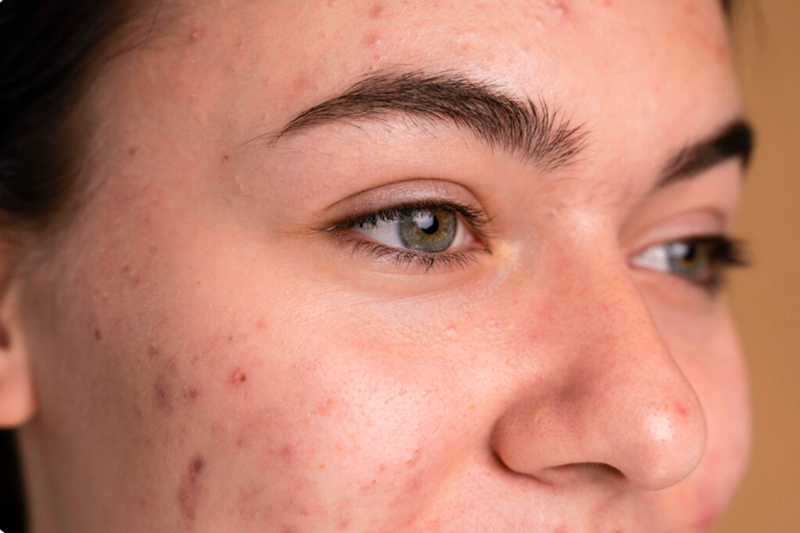
Acne scars develop when inflammation from acne damages the deeper layers of the skin and the skin heals with a structural change.
Online Aesthetic Consultation
Book an Online Aesthetic Consultation with Dr. Elham to discuss your goals and choose the most suitable option for you.

Deep and inflammatory acne, particularly nodules and cysts, is more likely to leave permanent scars. Picking, squeezing, or popping acne can also increase the risk by causing additional inflammation and tissue damage.
Acne scars are generally divided into two main categories:
- Atrophic scars: Depressions or indentations in the skin caused by a loss of tissue.
- Raised scars: Areas of excess scar tissue that sit above the normal skin surface.
Most acne scars are atrophic, and these are commonly classified as ice pick, boxcar, and rolling scars.
The Main Types of Acne Scars
The easiest way to understand the Types of Acne Scars is to look at their shape, depth, and texture.
1. Ice Pick Scars
Ice pick scars are small, narrow depressions that extend relatively deeply into the skin.
They often have a tiny opening at the surface but can extend deeper than their width suggests. This gives them the appearance of small punctures in the skin.
Common characteristics:
- Narrow opening
- Relatively deep depression
- Often V-shaped
- Usually more noticeable at close range
Because ice pick scars are narrow and deep, their structure differs significantly from broad, shallow scars.
2. Boxcar Scars
Boxcar scars are wider depressions with relatively well-defined edges.
They can be round or oval and may be shallow or deep. Their distinct edges can make them particularly noticeable when light falls across the skin.
Common characteristics:
- Wider than ice pick scars
- Round or oval shape
- Defined edges
- Can be shallow or deep
- Often appear as individual depressions
Boxcar scars can vary considerably from one person to another, so their appearance is not always identical.
3. Rolling Scars
Rolling scars create a broad, uneven, or wavy appearance rather than looking like individual holes.
They usually have softer, sloping edges. Fibrous bands beneath the skin can contribute to the way the surface appears pulled downward in certain areas.
Common characteristics:
- Broad depressions
- Soft, sloping edges
- Uneven or wavy texture
- Often more visible under certain lighting
Rolling scars can sometimes appear less obvious when the skin is stretched because their edges are not as sharply defined.
Ice Pick vs Rolling vs Boxcar Scars

Understanding ice pick vs rolling vs boxcar scars becomes easier when you compare their basic structure.
| Scar type | Appearance | Key feature |
|---|---|---|
| Ice pick | Small, deep openings | Narrow and deep |
| Boxcar | Round or oval depressions | Defined edges |
| Rolling | Broad, wavy depressions | Sloping edges |
These categories describe the structure and appearance of individual scars. It is also possible to have more than one type at the same time.
For example, someone may have a combination of ice pick and rolling scars, meaning the skin may show both deep narrow marks and broader uneven areas.
What Are Atrophic Acne Scars?
An atrophic acne scar is a depression that sits below the normal surface of the skin.
The term atrophic refers to a reduction or loss of tissue. With acne scarring, significant inflammation can affect collagen and other structures that support the skin, leaving an indentation after the acne has healed.
The three primary types of atrophic acne scars are:
- Ice pick scars
- Boxcar scars
- Rolling scars
This classification is particularly useful when discussing treatment because different scar structures may respond differently to different approaches.
Are Acne Marks the Same as Acne Scars?
Not necessarily.
After acne disappears, the skin may remain red, pink, brown, or darker than the surrounding area. These flat color changes are often mistaken for scars.
A useful distinction is:
Acne marks change the color of the skin, while true acne scars change its texture or structure.
For example, a flat brown spot left after a pimple is not the same as a boxcar scar that creates a visible depression.
This distinction matters because color changes and structural scars may require very different approaches.
What Causes Different Types of Acne Scars?
Acne scarring is strongly associated with inflammation and damage to deeper skin tissue.
The greater the inflammation and tissue injury, the greater the potential for a lasting structural change.
Factors associated with acne scarring include:
- Deep or inflammatory acne
- Nodules and cysts
- Repeated picking or squeezing
- Significant inflammation
- Individual differences in how the skin heals
Not everyone who develops severe acne will develop the same scars. The healing process and characteristics of the individual skin can influence both the amount and appearance of scarring.
Can Acne Scars Be Prevented?

Preventing severe acne from causing prolonged inflammation is one of the most important steps in reducing the risk of permanent scarring.
Avoiding the temptation to squeeze or pick active acne can also help reduce additional damage to the skin.
If you frequently develop deep, painful, or inflammatory acne, getting appropriate acne care early may be more useful than waiting until scars have developed.
Once a scar has formed, the focus generally shifts from preventing scarring to improving its appearance.
Do Different Acne Scars Need Different Treatments?
Yes. The physical structure of an acne scar can influence which treatment options may be considered.
An ice pick scar, for example, is narrow and deep, while a rolling scar is broader and has softer edges. These differences mean that the same approach may not be equally suitable for every scar.
A dermatologist may evaluate factors such as:
- Scar type
- Scar depth
- Number of scars
- Skin texture
- Skin tone
- Location of the scars
- Previous treatments
- Current acne activity
Depending on the individual situation, professional Acne Scar Treatment may include options such as microneedling, laser treatments, chemical peels, fillers, or specific scar procedures.
The appropriate option depends on the characteristics of the scars rather than simply treating every acne scar in the same way.
What Are Raised Acne Scars?
Not every acne scar creates a depression.
Some scars are raised because the body produces excess scar tissue during healing. These are different from atrophic scars.
Hypertrophic Scars
Hypertrophic scars are raised areas of scar tissue that generally remain within the boundaries of the original injury.
Online Aesthetic Consultation
Book an Online Aesthetic Consultation with Dr. Elham to discuss your goals and choose the most suitable option for you.
They may appear firm or elevated compared with the surrounding skin.
Keloid Scars
Keloids are raised scars that can extend beyond the original area of injury.
They can occur after relatively minor skin injuries and are structurally different from ice pick, boxcar, and rolling scars.
Because raised scars have a different structure from depressed scars, they should not be approached in exactly the same way.
How Can You Tell Which Type of Acne Scar You Have?
You can often get a general idea by looking at the shape and texture of the scar.
Ask yourself:
- Is it narrow and deep? It may resemble an ice pick scar.
- Is it wider with clear edges? It may resemble a boxcar scar.
- Does it create a broad, wavy texture? It may resemble a rolling scar.
- Is it raised above the surrounding skin? It may be a hypertrophic scar or keloid.
- Is it completely flat but darker or redder than the surrounding skin? It may be a post-acne color change rather than a true scar.
However, identifying a scar by appearance alone is not always straightforward. A dermatologist can examine the skin more closely and determine the characteristics that may not be obvious in a mirror or photograph.
Why Does Identifying the Scar Type Matter?
It is easy to think of all acne scars as the same problem, but their structures can be very different.
A narrow ice pick scar does not have the same shape as a shallow boxcar scar, and neither has the same structure as a rolling scar. These differences can influence which professional treatments are considered.
Identifying the scar type also helps set more realistic expectations. Rather than searching for a single solution for all acne scars, you can focus on the specific characteristics of your skin.
Can Acne Scars Go Away on Their Own?

Some post-acne marks can gradually become less noticeable as the skin changes over time.
True depressed acne scars are different because they represent a structural change in the skin. They generally do not disappear completely without treatment.
Their appearance can also change with age and changes in skin texture or firmness.
If the scars are bothering you, a dermatologist can help determine whether treatment may improve their appearance and which options are appropriate for the specific scar type.
When Should You See a Dermatologist?
Professional evaluation can be particularly useful if:
- You have deep or extensive acne scars.
- You are unsure whether a mark is a scar or discoloration.
- You have several different types of scars.
- Your scars are raised.
- You continue to develop inflammatory acne.
- Scarring is affecting your confidence or daily life.
- You are considering a professional scar treatment.
A proper assessment can help distinguish between different scar types and avoid choosing a treatment based only on general information found online.
Frequently Asked Questions
What are the main types of acne scars?
What is the difference between ice pick and boxcar scars?
What do rolling acne scars look like?
Are acne marks the same as acne scars?
Can you have more than one type of acne scar?
Do acne scars disappear naturally?
Does every acne scar need treatment?
Conclusion
Understanding the Types of Acne Scars starts with recognizing that acne scarring is not one single condition. Ice pick, boxcar, and rolling scars may all appear as depressions, but their shape, depth, and underlying structure can be very different.
The first useful step is to determine whether you are dealing with a true structural scar or a temporary post-acne mark. From there, understanding your specific scar type can make it easier to discuss appropriate options with a qualified professional.
Whether your skin has narrow ice pick scars, defined boxcar depressions, rolling texture, or raised scars, identifying what you are actually dealing with is the foundation for making informed decisions about your skin.




Leave a Comment