

Do you think the more active ingredients you add to your skincare routine, the better your results will be? Not necessarily. In fact, using too many ingredients at once can overwhelm your skin and lead to irritation.
The key is not to use more, but to use the right Active Ingredients in Skincare for your specific concerns. A simple, well-balanced routine with a few effective ingredients can often deliver better results than layering multiple treatments without a clear plan..
What Are Active Ingredients in Skincare?

Active Ingredients in Skincare are ingredients included in a formula because they are intended to produce a specific effect on the skin. Depending on the ingredient, that effect may involve hydration, exfoliation, antioxidant protection, acne management, barrier support, pigmentation concerns, or changes in the appearance of fine lines and texture.
Online Aesthetic Consultation
Book an Online Aesthetic Consultation with Dr. Elham to discuss your goals and choose the most suitable option for you.

The word “active” can be used broadly in the beauty industry. Some ingredients have a direct treatment-oriented role, while others primarily support the skin’s natural barrier or hydration.
For example, salicylic acid is commonly used to exfoliate inside pores, while hyaluronic acid primarily helps attract and retain water. Retinoids have a different role again, influencing processes involved in skin renewal.
Understanding these differences makes it easier to choose skincare with active ingredients based on your actual needs rather than simply selecting the strongest product available.
How Do Active Ingredients Work?
Different Active Ingredients in Skincare work through different mechanisms, which is why there is no single ingredient that is ideal for everyone.
Some ingredients mainly work at the surface of the skin. Exfoliating acids such as glycolic acid and lactic acid help loosen connections between dead skin cells, which can improve the appearance of texture and dullness.
Other ingredients focus more on hydration and barrier function. Humectants such as hyaluronic acid attract water, while ceramides help support the lipid structure of the skin barrier.
Antioxidants such as vitamin C help protect against oxidative stress caused by environmental factors. Retinoids work differently by influencing cellular processes associated with skin renewal and other changes in the skin over time.
Because these mechanisms are different, combining several skin care actives can sometimes be useful. However, more ingredients do not automatically mean better results.
The Most Useful Active Ingredients and Their Roles

The best approach is to understand what each ingredient is designed to do before adding it to your routine.
Hyaluronic Acid
Hyaluronic acid is a humectant that attracts and retains water, helping the skin feel hydrated and less tight. It can generally be used in both morning and evening routines.
Niacinamide
Niacinamide, a form of vitamin B3, supports the skin barrier and can help address excess oil, uneven-looking tone, and overall skin resilience. It is compatible with many skincare ingredients.
Vitamin C
Vitamin C is an antioxidant commonly used to improve the appearance of dullness and uneven skin tone. Its effectiveness and tolerability depend on its form, concentration, and formulation.
Salicylic Acid
Salicylic acid is an oil-soluble exfoliant commonly used for clogged pores, blackheads, and acne-prone skin. Use it according to your skin’s tolerance to avoid excessive irritation.
Glycolic Acid
Glycolic acid is an AHA that exfoliates the skin’s surface and helps improve the appearance of uneven texture and dullness. It may cause irritation when overused.
Lactic Acid
Lactic acid is an AHA with exfoliating and humectant properties. It can help improve uneven texture and dull-looking skin while offering a gentler exfoliating option for some people.
Azelaic Acid
Azelaic acid is a versatile active commonly used for blemishes, uneven pigmentation, and redness-prone skin. It can be used in either the morning or evening.
Retinoids
Retinoids are vitamin A derivatives commonly used for fine lines, uneven texture, and acne. Different retinoids vary in strength and use, so beginners should introduce them gradually.
Ceramides
Ceramides are lipids that support the skin barrier and help reduce moisture loss. They are useful for dry or barrier-compromised skin and can be used morning and evening.
Benzoyl Peroxide
Benzoyl peroxide is an antimicrobial acne treatment. It can cause dryness or irritation, so it should be used at a suitable frequency alongside barrier-supporting skincare.
Choose Active Ingredients Based on Your Skin Concern

The most effective way to choose Active Ingredients in Skincare is to start with your primary concern instead of trying to address everything simultaneously.
For Dry or Dehydrated Skin
If your skin feels tight, rough, or dehydrated, begin with hydration and barrier support.
Useful options may include:
- Hyaluronic acid
- Ceramides
- Niacinamide
- A gentle moisturizer
- Daily sunscreen
Adding several exfoliating acids to already-dry skin may make the problem worse. A healthy barrier should come before an aggressive treatment routine.
For Clogged Pores and Excess Oil
Salicylic acid is often a logical option for clogged pores and blackheads because of its oil-soluble nature.
Niacinamide can also complement an oil-control routine. For acne, benzoyl peroxide or a retinoid may be appropriate depending on the type and severity of the problem.
The important point is not to use every acne-focused active at once. Irritation can make a routine harder to maintain and may compromise the skin barrier.
For Uneven Skin Tone
Uneven-looking pigmentation can have several causes, so there is no universal brightening ingredient.
Vitamin C, niacinamide, azelaic acid, and retinoids are commonly incorporated into routines targeting uneven tone. Exfoliating acids may also improve the appearance of dullness and surface discoloration.
Daily broad-spectrum sunscreen is particularly important because UV exposure can contribute to persistent pigmentation and undermine efforts to improve uneven tone.
For Fine Lines and Uneven Texture
For visible signs of aging and uneven texture, retinoids are among the most established options in topical skincare.
Gentle exfoliation may also improve the appearance of surface texture. However, combining a retinoid with several exfoliating acids from the beginning is unnecessary for most beginners.
Consistency is generally more important than creating the most aggressive routine possible.
How to Layer Skincare With Active Ingredients
Using Active Ingredients in Skincare correctly is not only about which products you own. The order and frequency can also influence how comfortable and practical your routine is.
A basic principle is to apply products from lighter textures to heavier ones, while following any specific instructions provided by the product manufacturer.
A Simple Morning Routine
A straightforward morning routine might look like this:
- Gentle cleanser, if needed
- One suitable active serum or treatment
- Moisturizer
- Broad-spectrum sunscreen
For example, someone concerned with uneven tone might choose vitamin C in the morning, followed by moisturizer and sunscreen.
Someone focused primarily on hydration might use hyaluronic acid instead.
A Simple Evening Routine
An evening routine could include:
- Cleanser
- Treatment or active ingredient
- Moisturizer
If using a retinoid or exfoliating acid, it is often practical to keep the rest of the routine simple.
The purpose of layering is not to fit as many products as possible into one routine. It is to create a sequence that your skin can tolerate consistently.
Can You Combine Different Skincare Actives?
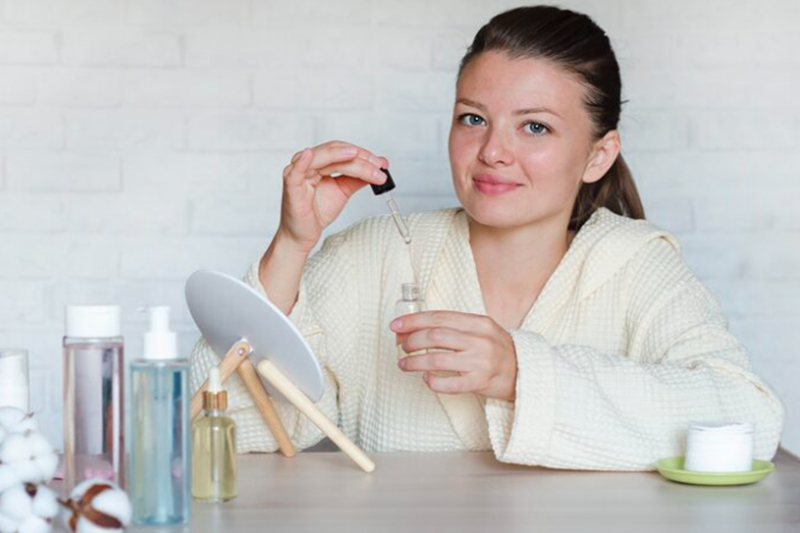
Yes, but compatibility is only one part of the decision.
Some skin care actives can work well together. For example, a hydrating ingredient such as hyaluronic acid can generally be used alongside many treatment ingredients.
The bigger issue is cumulative irritation.
Using a retinoid, glycolic acid, salicylic acid, and a strong vitamin C product simultaneously may create unnecessary irritation even if the ingredients are not inherently “incompatible.”
A better strategy is to introduce one major treatment at a time. Once your skin is comfortable, you can evaluate whether another ingredient is actually necessary.
Online Aesthetic Consultation
Book an Online Aesthetic Consultation with Dr. Elham to discuss your goals and choose the most suitable option for you.
Why More Active Ingredients Are Not Always Better
The popularity of active-based skincare can create the impression that an effective routine should contain multiple serums, exfoliants, and treatments.
In reality, the skin has limits.
Too many active products can contribute to:
- Dryness
- Burning or stinging
- Redness
- Flaking
- Increased sensitivity
- Barrier disruption
When irritation appears, adding another treatment is usually not the solution.
Sometimes the best move is to temporarily simplify the routine to a gentle cleanser, moisturizer, and sunscreen until the skin feels comfortable again.
Common Mistakes With Active Ingredients
Even a well-formulated product can cause problems when used incorrectly.
Starting Too Many Products at Once
If you introduce four new products simultaneously and develop irritation, it becomes difficult to determine which one is responsible.
Using Strong Products Too Frequently
A stronger formula does not automatically require daily application. Skin tolerance matters.
Ignoring the Skin Barrier
Treatment-focused routines should still include moisturization and barrier support.
Forgetting Sunscreen
Many routines designed to improve tone, texture, or signs of aging become less effective when daily UV protection is neglected.
Changing Products Too Quickly
Skin does not always change overnight. Constantly switching products makes it difficult to evaluate whether a routine is working.
Where Does Medical-Grade Skincare Fit?
Medical-Grade Skincare is often marketed as a more advanced category of skincare, but the label itself should not be treated as proof that a product is automatically superior.
What matters is the actual formulation, ingredient, concentration where relevant, stability, intended use, evidence supporting the ingredient, and whether the product is appropriate for the individual.
In some cases, professionally guided skincare can be useful, particularly when someone is dealing with persistent acne, significant pigmentation, or other concerns that may require a more targeted approach.
Best Practices for Using Active Ingredients

To get better results from Active Ingredients in Skincare, keep your routine practical.
- Introduce new actives one at a time.
- Follow the product’s directions.
- Start slowly when an ingredient has a higher irritation potential.
- Use moisturizer consistently.
- Wear broad-spectrum sunscreen during the day.
- Avoid unnecessary duplication of similar exfoliating ingredients.
- Pay attention to persistent redness, burning, or discomfort.
- Simplify your routine if your skin becomes irritated.
- Consider professional advice for persistent or severe skin concerns.
The right routine should be sustainable. If a product is so irritating that you cannot use it consistently, its theoretical benefits become much less useful.
Frequently Asked Questions
What are active ingredients?
Which active is best for beginners?
Can I combine several actives?
Should I use actives every day?
Can actives damage the skin barrier?
Do stronger actives work faster?
Conclusion
Choosing the right Active Ingredients in Skincare starts with understanding what your skin actually needs. Hydrating ingredients can help support dry or dehydrated skin, exfoliating acids can address certain texture and pore concerns, antioxidants can provide protective benefits, and retinoids can target several long-term concerns related to skin renewal and appearance.
The best routine is not necessarily the one with the most Active Ingredients in Skincare. It is the one that combines appropriate ingredients, sensible frequency, barrier support, and daily sun protection in a way that you can maintain.
Instead of chasing every new active, focus on identifying your main concern, selecting a suitable ingredient, introducing it gradually, and giving your routine enough consistency to evaluate the results. That approach makes skincare simpler, more predictable, and much easier to personalize.




Leave a Comment